
AI-Generated Audio Research Report
Chapter 1 Industry Overview
1.1 Definition
The AI audio generation industry, as a key area of Artificial Intelligence Generated Content (AIGC) technology penetration, is rapidly becoming the frontier of technological innovation. This field focuses on using advanced artificial intelligence technology and complex algorithms to create audio content, covering multiple subfields such as speech synthesis, music production, and sound effects synthesis. By integrating machine learning and deep learning algorithms, AI audio generation technology can mimic and reproduce human speech, music rhythms, and various sound effects, achieving highly natural and realistic audio output.
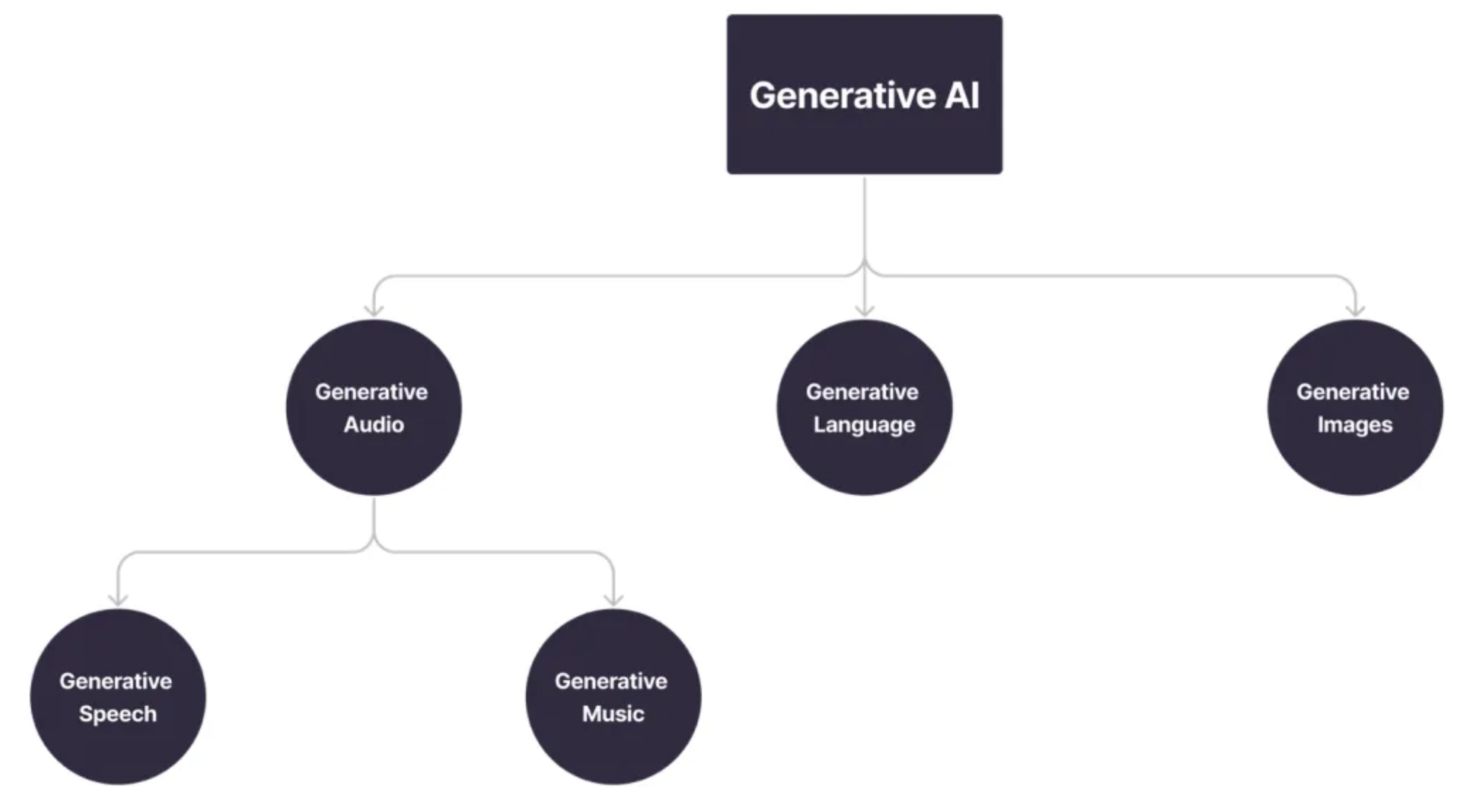
The position of AI audio generation in AIGC
With continuous technological advancements, AI audio generation can not only accurately mimic known sounds but also create entirely new audio experiences. For example, it can automatically generate unique sound effects, compose original music, or process language information through automatic speech recognition technology. These applications demonstrate the vast potential and diverse functionalities of AI in the audio domain.
The application scope of the AI audio generation industry is broad, covering entertainment, advertising, education, news dissemination, and many other fields. In the entertainment industry, AI audio generation technology can provide unique sound design and background music for movies, TV shows, games, and more. In the advertising industry, it can help create engaging voiceovers and sound effects to enhance the impact of advertisements. In the education sector, this technology can be used to provide multilingual voice-overs for educational materials or create interactive learning experiences.
Furthermore, the application of AI audio generation technology in speech-assistive devices and smart home systems is increasing. It can provide personalized voice interaction experiences, making interactions between users and devices more natural and seamless. This technology also plays a significant role in industries such as healthcare, law, and news, being used for generating automated medical reports, voice versions of legal documents, or automated news broadcasts.
According to Qianji Investment Bank, the AI audio generation industry is not only a product of technological innovation but also a significant driving force for future development. It continues to push the boundaries of artificial intelligence technology and is changing the way we interact with audio content. With further advancements in AI technology, it is foreseeable that AI audio generation will play an increasingly crucial role in the digital world of the future.
1.2 Industry Brief History
The AI audio generation industry, as an essential part of the modern technological revolution, has experienced significant development in recent years. Starting from the 1990s, this industry has gone through significant stages from the exploratory phase to the maturation of intelligent technologies and to the current phase of innovative development, with each stage representing significant leaps in technology and applications.
Early Stage (1990s to early 2000s)
In the early days of the AI audio generation industry, the focus was primarily on the development of foundational technologies such as speech recognition, text conversion, and speech synthesis. During this period, although the technology was relatively primitive, it laid a solid foundation for future developments. These initial explorations opened up new possibilities in the field of artificial intelligence, indicating the tremendous potential of combining AI with audio technologies.
Intelligent Stage (Mid-2000s to early 2010s)
Entering the 21st century, with the advancement of artificial intelligence technology, the AI audio generation industry began to enter the intelligent stage. During this period, the industry started venturing into more complex areas such as natural language processing, machine translation, and speech interaction. The launch of Apple's voice assistant Siri in 2011 marked a commercial breakthrough in intelligent voice interaction technology, providing an essential reference model for intelligent applications. The introduction of Siri not only changed consumer expectations for smart devices but also propelled the entire industry towards more advanced intelligent development.
Innovative Development Stage (Mid-2010s to Present)
In recent years, the AI audio generation industry has entered a new stage of innovation and development. During this period, the rapid development of deep learning, big data, and cloud computing technologies has significantly expanded the application scope of AI audio technologies. In 2014, Amazon's intelligent speaker Echo not only pioneered the smart speaker market but also paved the way for the popularization of smart homes. In 2016, Google's release of the TensorFlow system made significant strides in natural language processing, greatly enhancing the capabilities of AI algorithms in speech data processing. In 2017, Google's WaveNet model made breakthroughs in the field of speech synthesis, improving the naturalness and audio quality of synthesized speech, further driving the development of the AI audio industry.
1.3 Current Development Status
The Chinese AI audio generation industry, as an important branch of AIGC technology, is in a rapid development phase. Although the current market size is relatively small, it is expected to experience significant growth and become one of the key markets in the future.
As of 2021, the market size of the Chinese AI audio generation industry is still immature, at less than 0.1 billion RMB. This scale corresponds to a penetration rate of less than 1% for AIGC technology in the Chinese AI audio generation industry. However, with the rapid growth of the AIGC industry and the increase in technology penetration rates, it is estimated that by 2026, the market size of the Chinese AI audio industry will reach approximately 10.5 billion RMB, demonstrating immense development potential.
The continuous development of the Chinese economy and the improvement of people's living standards have led to a growing demand for entertainment, culture, and knowledge among the public. This increasing demand directly drives the market expansion of the AI audio generation industry. For example, an increasing number of people are starting to listen to audio books and audio dramas, and AI audio generation technology can quickly and conveniently generate this content to meet the growing market demand. In 2020, the size of the Chinese audio market reached 44.21 billion RMB, with the sales of audio books reaching 11.5 billion RMB, indicating a clear trend of growth in the market demand for the AI audio generation industry.
From a technological perspective, the development of the AI audio generation industry has benefited from several key factors:
- Generation algorithms and pre-training models: The development of these advanced AI technologies provides the necessary foundation for AIGC technology, making the application of AI audio generation technology possible.
- Multi-modal technology: The development of this technology further promotes the development of AIGC, providing more innovative possibilities for AI audio generation.
- Industrial ecosystem: The industrial ecosystem of AIGC has formed a complete three-tier structure, including the foundational layer (AIGC technology infrastructure), the intermediate layer (scenario-based, customized application tools layer), and the application layer (providing various AIGC products and services). This mature ecosystem provides a solid foundation for the development of the AI audio generation industry.
Over the next five years, with the rapid iteration of AIGC technology and deeper penetration into the AI audio generation industry, this industry is expected to achieve significant growth. Technological advancements and increased market demand will work together to drive the industry forward, leading to a transformation from the current nascent market to a multi-billion level market in the future.
Chapter 2 Technological Development and Risk and Competition Analysis
2.1 Classification
AI audio generation technology, as an essential branch of the field of artificial intelligence, has become a hot topic in modern technological development. This field is mainly divided into three categories based on different application scenarios: speech synthesis, music generation, and speech recognition. Each category has its unique application scope and technical characteristics, collectively driving the development of the AI audio generation industry.
Speech Synthesis
Speech synthesis technology aims to convert textual information into spoken language output, making it one of the core applications in the AI audio generation industry. This technology is based on deep learning algorithms such as recurrent neural networks (RNNs) and convolutional neural networks (CNNs), which can accurately simulate human speech characteristics, including timbre, pitch, and intonation. Speech synthesis has a wide range of applications, playing important roles not only in everyday voice assistants and voice advertisements but also providing assistive tools for people with disabilities, such as reading software and voice navigation. Currently, this area occupies nearly 70% of the market share in AI audio generation, reflecting its significant position in the industry.
Music Generation
Music generation technology automatically generates music through AI means, representing another crucial area in AI audio generation. This technology primarily utilizes machine learning and deep learning algorithms such as generative adversarial networks (GANs) and autoencoders (AEs) to simulate the human music creation process. While the quality of generated music still needs improvement, and market acceptance is limited, its potential in music composition, game sound effects production, and film scoring should not be underestimated. The data sources for music generation include music libraries, music samples, and music theory, allowing the production of various music clips and complete music works in different styles.
Speech Recognition
Speech recognition technology focuses on converting human speech signals into digital signals, which are then transformed into text output, representing another critical branch of AI audio generation. This technology is widely used in fields such as speech search, intelligent customer service, and speech translation. Its technical principles are usually based on deep learning models, such as recurrent neural networks (RNNs) and convolutional neural networks (CNNs), enabling accurate recognition and transcription of human speech. Intelligent speakers, voice assistants, etc., are typical applications of speech recognition technology.
2.2 Technological Development
The rapid development of artificial intelligence audio generation technology is changing the way we understand and use audio. The progress in this technology field is mainly due to the breakthroughs in AI Text-to-Speech (TTS) technology, which has become the cornerstone of modern AI audio technology.
The primary goal of AI TTS technology is to transform written text into lifelike speech. This technology involves complex algorithms and advanced speech synthesis techniques that can analyze text and understand its subtle nuances. The development of AI TTS relies on deep learning and neural networks, enabling AI TTS models to decipher text, determine appropriate intonations, and synthesize them into spoken language. This process requires extensive training of AI with human speech datasets to generate authentic, emotionally rich voices.
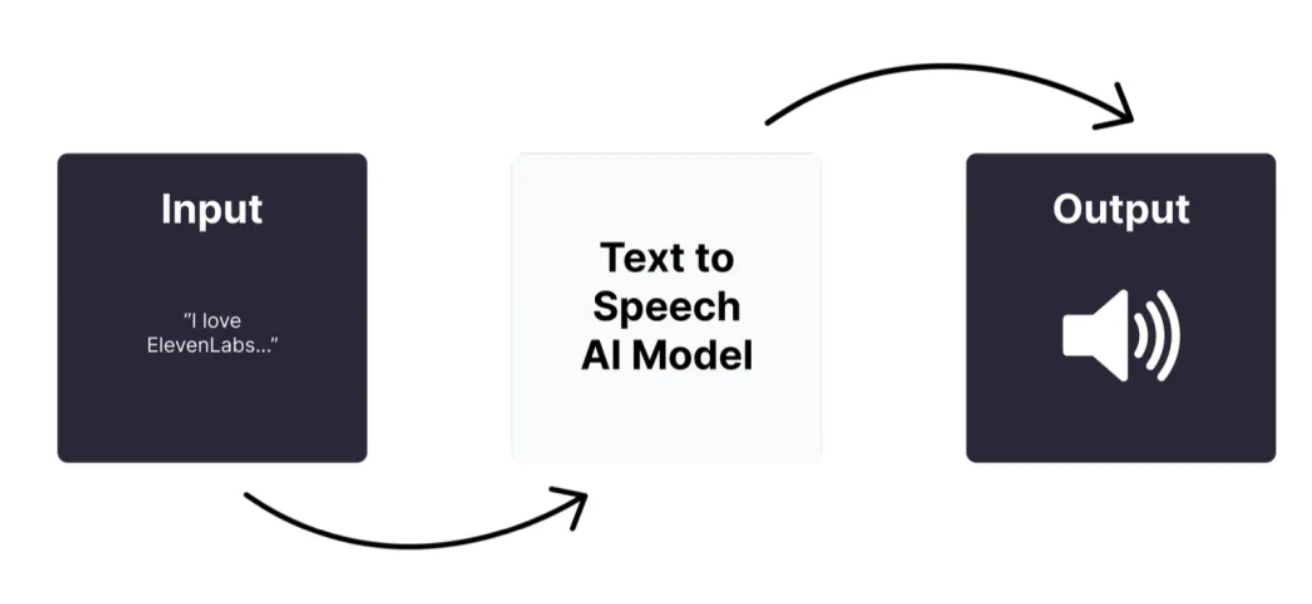
AI TTS technology applications are not limited to simple text-to-speech conversion. It provides the foundation for more complex AI audio programs, such as speech cloning and voice-over. These technologies enable AI-generated natural, realistic voices to be used for various applications, driving the overall development of the AI audio generation field.
Speech cloning aims to create an artificial replica almost identical to the original human voice. This technology relies on advanced algorithms and deep learning techniques, divided into three parts: "speaker encoder," "generator," and "discriminator." These parts work together to mimic the voice characteristics and intonations of specific individuals. Through extensive training on speech data, these AI systems become masters of imitation, capable of generating highly realistic voices.
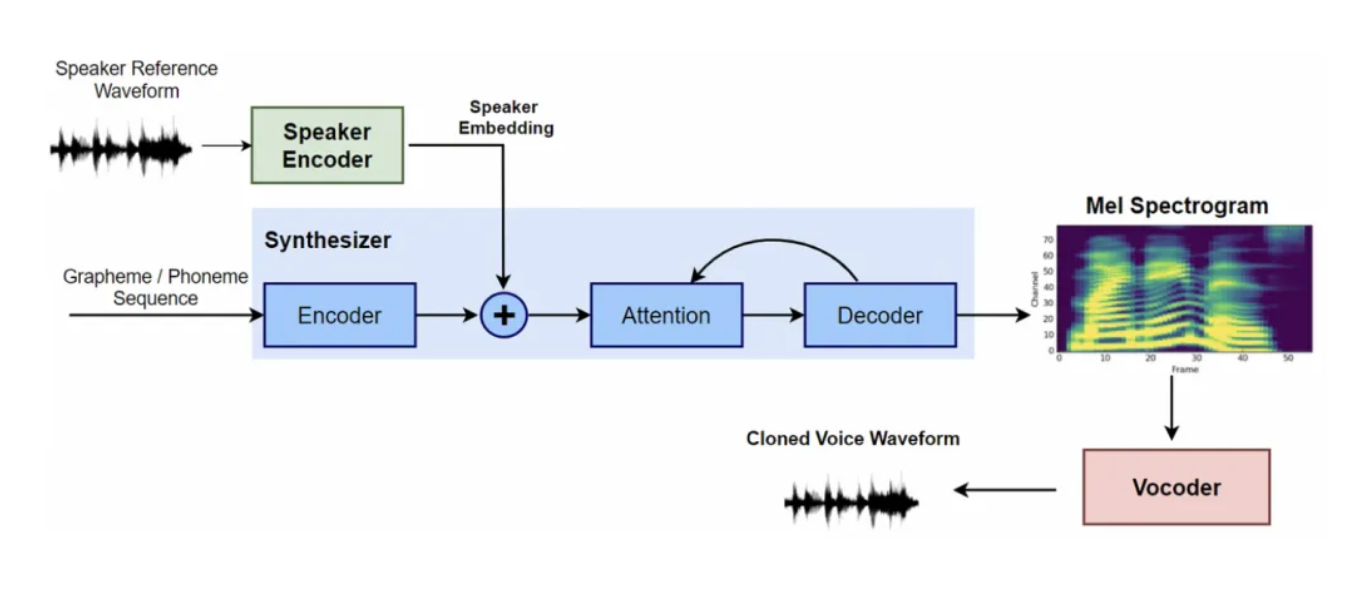
Example of the working principle of a voice cloning model
Synthetic speech represents the pinnacle of artificial intelligence audio synthesis. AI model-driven synthetic speech generators can be finely customized, offering various pitches, accents, and tones to create vivid sounds suitable for various applications. Leveraging neural network audio generation and deep learning processes, synthetic speech can capture the subtle nuances of spoken language and emotional variations, especially suitable for applications requiring strong emotional expression capabilities.
With the continuous advancement of AI technology, the boundaries between audio, text-to-image, and chatbot models are gradually blurring, enabling AI to seamlessly perform cross-media tasks. The development of artificial intelligence audio generation technology is not only a product of technological innovation but also an essential component of the future digital world.
AI audio generation technology is ushering in a new era, changing not only the way content is created and consumed but also expanding the accessibility of audio content. From AI TTS to speech cloning and synthetic speech, the development of these technologies will continue to drive innovation in the audio domain, bringing new opportunities and challenges to various industries. With technological advancements, we can expect to see more innovative applications emerge, fundamentally changing how people interact with audio content.
2.3 Risk Analysis
The AI audio generation industry, as an emerging field, is rapidly evolving but also faces various risks and challenges. These risks encompass technological, market, legal, ethical, and security aspects, profoundly impacting the healthy development of the industry.
Technological Risks
Technology Maturity: AI audio generation technology is still evolving, and varying levels of technology maturity may lead to inconsistent audio quality that fails to meet professional standards.
Technology Dependency: Over-reliance on specific technologies or algorithms may limit innovation and hinder industry development when faced with new challenges.
Data Quality and Privacy: High-quality training data are crucial for AI audio generation technology, and the data collection process may raise privacy issues. Inconsistent data quality can affect the final output quality.
Market Risks
Uncertainty in Market Demand: The application scenarios of AI audio generation technology are still being explored, and the uncertainty of market demand may affect the industry's long-term development.
Intense Market Competition: With the industry's development, more companies and startups are entering the competition, potentially leading to market saturation.
Rapid Technological Updates: The fast pace of technological iterations places higher demands on companies' R&D capabilities and increases investment risks.
Legal and Ethical Risks
Copyright and Intellectual Property: AI-generated audio content may involve copyright and intellectual property issues, especially when imitating human voices or using existing music works for creation.
Ethical Issues: AI-generated audio may be used for creating false information or engaging in fraudulent activities, such as deepfake technology.
Lagging Legal Regulations: Existing laws and regulations may not fully adapt to the development of AI audio generation technology, leading to regulatory gaps or uncertainties.
Security Risks
Data Security: The large amount of data involved in AI audio generation may face risks of leakage, misuse, or hacking attacks.
System Security: AI audio generation systems may be vulnerable to malicious software attacks, affecting the normal provision of services.
Misuse Risks: Misuse of technology may lead to consumer distrust, affecting industry reputation.
While the AI audio generation industry is advancing, it must comprehensively consider and address the above risks. Industry participants need to take appropriate measures in technological innovation, market strategies, legal compliance, and security assurance to ensure the industry's healthy, stable, and sustainable development. Additionally, governments and regulatory bodies should strengthen guidance and oversight of the industry, formulate suitable policies and regulations to promote the orderly development of the industry. Through collective efforts, the AI audio generation industry can effectively address risk challenges and realize long-term development.2.4 Competition Analysis
Porter's Five Forces model is an essential tool for analyzing the competitive structure of industries. Applying this model to analyze the AI audio generation industry can provide a deep understanding of its competitive environment.Competitive Rivalry (Intra-Industry Competition)
Competition within the AI audio generation industry is relatively intense. With the development of technology and the gradual realization of market potential, more companies and startups are entering this field. This includes large technology companies such as iFlytek, Baidu, Alibaba, as well as a range of startups focusing on specific AI audio applications. These companies compete in areas such as technology, market channels, and customer resources.
Threat of New Entrants
The entry barrier of the AI audio generation industry is relatively high, mainly in terms of technology development and expertise. However, with the popularization of AI technology and the decrease in costs, the difficulty for new companies to enter the market is decreasing. New entrants may challenge existing companies by offering unique innovations, focusing on niche markets, or providing low-cost solutions.
Threat of Substitutes
Although AI audio generation technology is unique, in some application areas such as speech synthesis and natural language processing, it may face threats from alternative technologies, such as traditional speech synthesis technology or manual audio production. These substitutes may compete with AI audio generation technology in terms of cost, quality, or reliability.
Bargaining Power of Suppliers
The suppliers in the AI audio generation industry mainly provide algorithms, AI technologies, computing resources, and datasets. Given the industry's reliance on high-quality data and advanced technology, these suppliers have a relatively strong bargaining power. However, with the increase of technology providers, the bargaining power of suppliers may be affected.Bargaining Power of Customers
Customers of AI audio generation technology include various commercial companies, educational institutions, entertainment industries, etc. These customers have high standards for product quality and service, giving them a certain bargaining power. However, due to the specialization and complexity of AI audio generation technology, customer bargaining power is limited by technical dependence and expertise level.
The AI audio generation industry is a technology-driven and innovation-intensive field. Intra-industry competition is fierce, and the threat of new entrants is increasing, while facing challenges from substitutes. Suppliers and customers in this industry possess certain bargaining power, but the extent is limited by the specificity of technology and market. Overall, the competitive environment of the AI audio generation industry is complex and ever-changing, requiring companies to continuously innovate and adjust strategies to maintain competitiveness.
Source: Intercontinental Investment WeChat Official Account